Sprout has spent years building toward something specific: a complete partnership for every stage of the technology lifecycle, from first deployment through in-service operation to final disposal. The new Garland, Texas campus is the latest and most visible proof of that commitment.
The Market Has a Problem. Sprout Built the Answer.
AI infrastructure is moving faster than the systems built to manage it. Racks are getting denser and hotter. GPUs fail in ways that are hard to diagnose and harder to resolve, and the skilled people who keep them running are in short supply. Most fleets operate well below their potential utilization, and against the economics of high-density compute, that gap is where margin quietly leaks. Keeping hardware healthy, in service, and fully utilized has become the difference between infrastructure that pays for itself and infrastructure that doesn't. And when equipment is finally retired, it still carries significant residual value for the operators with the capability to recover it.
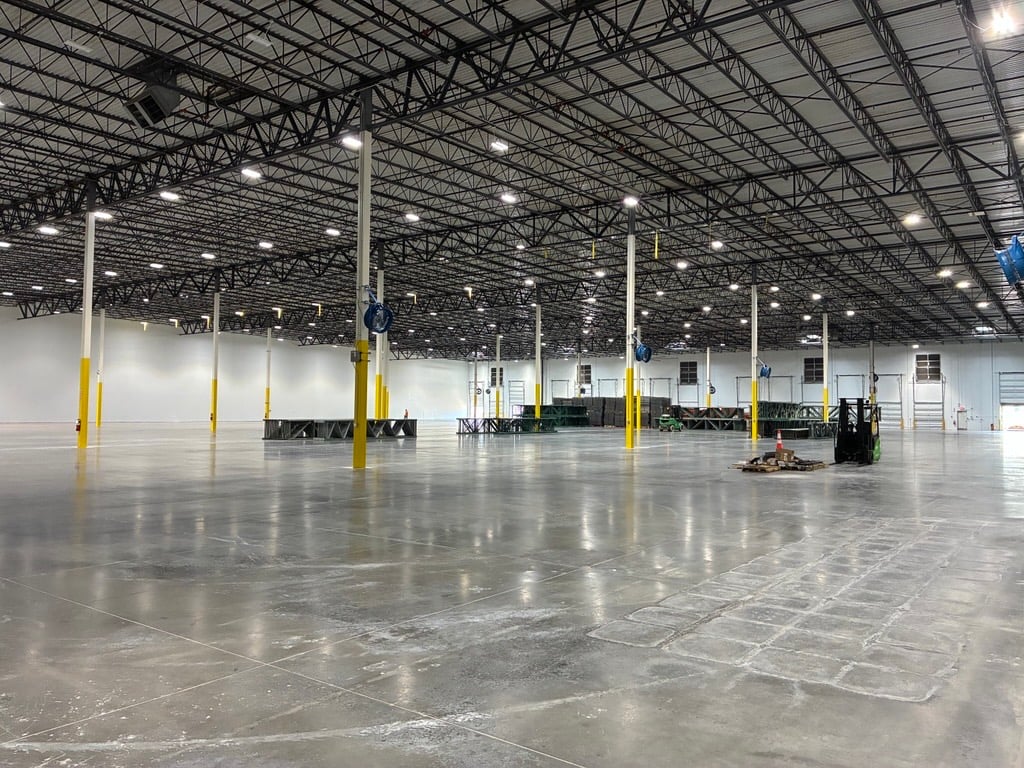
Opening in the second half of 2026, the new over 127,000-square-foot flagship facility in Garland is purpose-built for high-volume repair, recertification, and value recovery of modern AI hardware. Of that, over 111,000 square feet is a dedicated warehouse and operations space. The infrastructure behind that work matches the ambition: four times the power capacity of Sprout's original Garland location, sized for the density, thermal load, and handling demands of modern AI systems.
"This facility is a proof point of where Sprout is headed," said Matthew Cranford, Chief Operating Officer. "We are not just adding capacity. We are investing in capability. The labs, the engineers, and the infrastructure we have put in place are purpose-built to handle the world's leading AI hardware at every stage of its lifecycle. Our clients need a partner who can meet that challenge. This is how we do it."
One Roof. Every Stage.
The new building anchors a multi-building campus in Garland, extending a global footprint that already spans North America and Europe. And it's here that the full lifecycle comes together most visibly.
Sprout engineers diagnose, repair, and recertify hardware in-house, including out-of-warranty GPU repair, failure analysis, and component harvesting that extends the working life of a customer’s fleet.
Where much of the market sorts hardware into working or scrap, Sprout keeps high-value equipment in circulation and returns as much of it as possible to productive use. That recertification capability also feeds configure-to-order operations for Velerity Compute, a Sprout company. Recertified components are assembled into enterprise-ready systems, including A100, H100, H200, and DGX A100 + systems & components from all major OEMs, and installed directly into data centers. Whatever can't be redeployed is remarketed through multiple channels, returning capital directly to clients. An asset arrives at end-of-life. It leaves as production-ready infrastructure. That's what a full lifecycle partnership looks like in practice.
Why This, Why Now
The enterprises managing AI hardware today need more than a vendor who can take equipment off their hands. They need a partner who can keep fleets running at full utilization, resolve failures fast, recover value at end of life, and feed that value back into the next deployment.
That's what Sprout has been building toward.
The Garland campus is the physical expression of that strategy, and it’s just getting started. To see how a full-lifecycle partnership can keep your fleet running longer, resolve failures faster, and recover more of its value, start a conversation with the Sprout team.